OX-ARC-2024-0472
Stone Stele, Pentelic Marble — Archaic Greek (Attic Alphabet, Pre-Euclidean)
Object Data
Find Context
Recovered during routine survey, May 2024. Found face-down in fill layer above bedrock. Not associated with any known structure or temenos. The deliberate placement face-down may indicate intentional concealment or ritual decommissioning, though this interpretation remains speculative.
Photograph
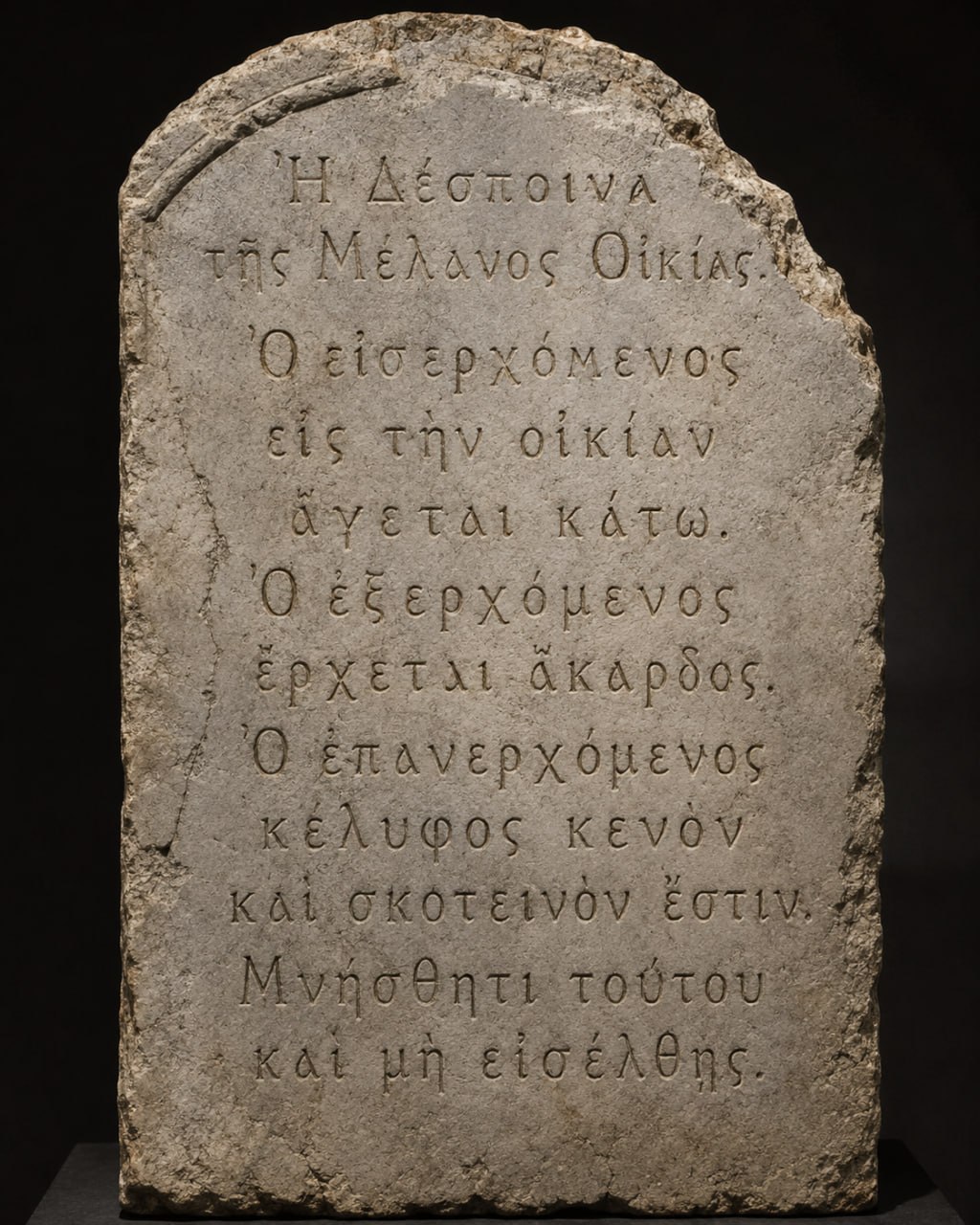
Fig. 1. Marble stele OX-ARC-2024-0472, obverse face. Museum photograph prior to transport.
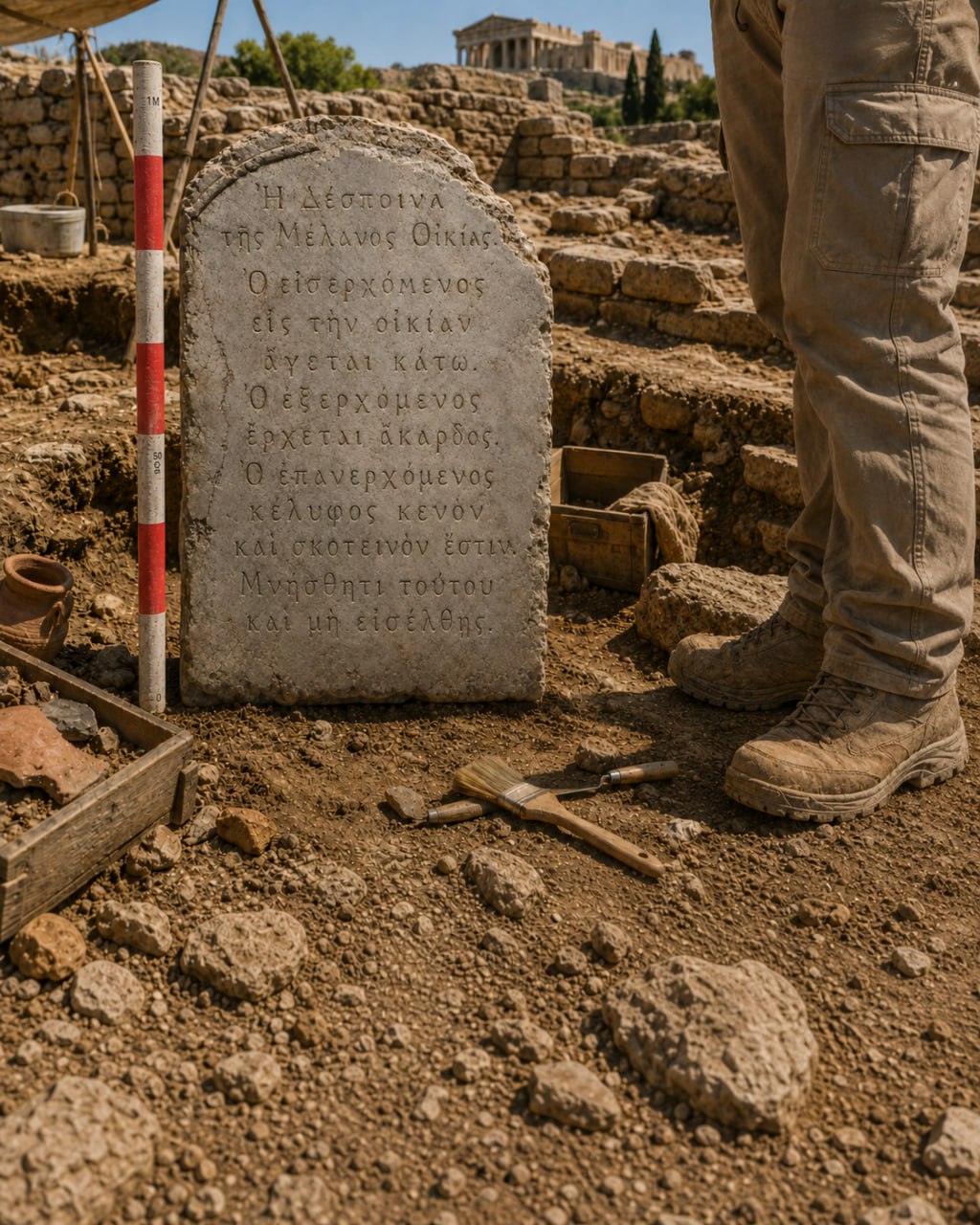
Fig. 2. Stele OX-ARC-2024-0472 in situ. South slope of the Acropolis, Athens. Grid Section 4B, depth 2.3m. Photograph: field team, May 2024.
Greek Text
Translation
The Mistress of the Black House.
He who enters the house is led below.
He who comes out arrives heartless.
He who returns is an empty and dark shell.
Remember this and do not enter.
Analytical Notes
The text presents significant interpretive challenges. Δεσποινα (‘Mistress’) as a divine epithet typically refers to Persephone in Arcadian cult (Pausanias 8.37.9). The phrase Μελανος Οικιας (‘of the Black House’) has no known parallel in archaic Greek epigraphy.
The apotropaic formula is structurally consistent with 7th-century boundary warnings (cf. IG I³ 1024, the Dipylon oinochoe inscription) but the content is unlike any cataloged example. The tripartite structure (entry → transformation → warning) is reminiscent of later mystery-cult language but predates our earliest Eleusinian evidence by approximately one century.
The term ακαρδος (‘heartless’ or ‘without heart’) is not attested elsewhere in archaic epigraphy. In later literary Greek, καρδια carries connotations of both emotional capacity and memory (cf. Homeric κατα φρενα και κατα θυμον). The semantic overlap with ‘loss of self’ may be significant.
Bibliography
Pausanias. Description of Greece, 8.37.9.
Jeffery, L. H. (1961). The Local Scripts of Archaic Greece. Oxford: Clarendon Press.
Clinton, K. (1992). Myth and Cult: The Iconography of the Eleusinian Mysteries. Stockholm.
[Researcher name redacted] (2024). Field notes, Appendix C. On file.