OX-ARC-2025-0038
Stone Tablet, Volcanic Tuff (Peperino) — Latin (Republican/Early Imperial Epigraphy)
Object Data
Find Context
Discovered during foundation reinforcement work beneath the north nave of the Basilica di Santa Sabina. Reused as building material in 5th-century construction phase. Original placement unknown. The tablet was found inverted, with the inscribed face against the earth — a common method of decommissioning sacred or official texts in late antiquity.
Photograph
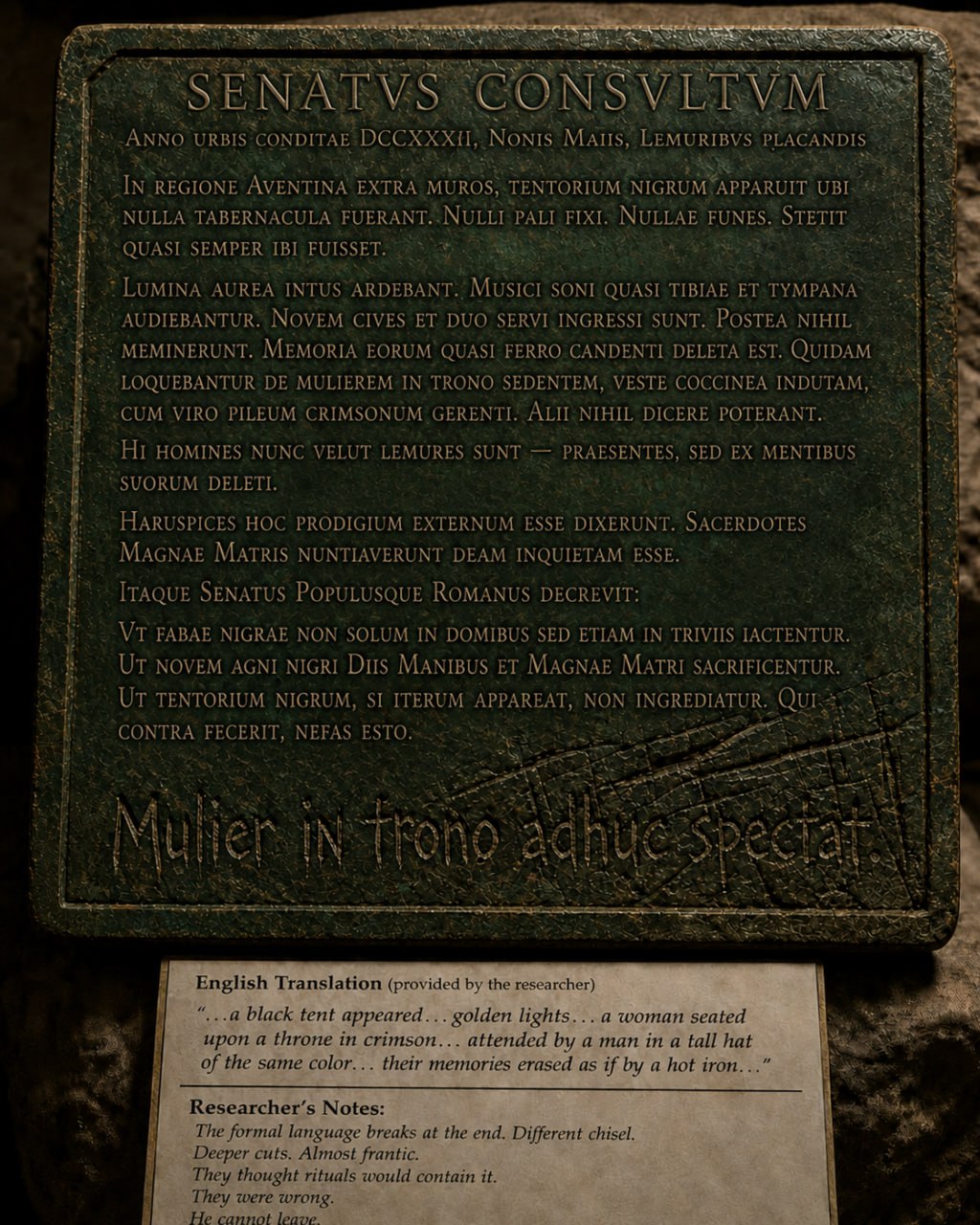
Fig. 1. Stone tablet OX-ARC-2025-0038. Volcanic tuff (peperino). Recovered from foundation fill, Basilica di Santa Sabina, Rome. Photograph: Museo Nazionale Romano.
Latin Text
Translation
Decree of the Senate
In the year 732 from the founding of the city, on the Nones of May, for the appeasing of the Lemures.
In the Aventine district beyond the walls, a black tent appeared where no tents had been. No stakes were fixed. No ropes. It stood as though it had always been there.
The night watchmen reported that golden lights burned within and singing was heard, although no one had entered or left. Three children from the nearest lane disappeared. Their parents, when asked the following day, said they had never had children.
The Senate decrees:
No one shall approach the tent.
No one shall speak the name of the woman within who must not be named.
If the tent appears again, the place shall be purified by fire and the earth sprinkled with salt.
He who enters, forgets.
He who returns, returns empty.
He who names, is named.
The woman on the throne still watches.
Epigraphic Notes
The text conforms to standard senatus consultum formulae in its opening (date, purpose) but deviates significantly in content. The reference to Lemures (spirits of the dead propitiated during the Lemuria, 9–13 May) provides the ritual context. The Nones of May (7 May) falls within this period.
The phrase tentorium nigrum (‘black tent’) has no parallel in Republican or Imperial Latin epigraphy. The closest comparable usage appears in military contexts (tentorium as campaign tent) but never with the adjective nigrum in a cultic or apotropaic context.
The tripartite warning formula (Qui intrat... Qui redit... Qui nominat...) is structurally parallel to the warnings attested in OX-ARC-2024-0471 and OX-ARC-2024-0472, though the third element (‘He who names, is named’) introduces a concept absent from the earlier texts.
Bibliography
Mommsen, T. (1887–1888). Römisches Staatsrecht. Leipzig.
Scheid, J. (2012). ‘Roman Animal Sacrifice and the System of Being.’ In Faraone, C. A. & Naiden, F. S. (eds.), Greek and Roman Animal Sacrifice. Cambridge University Press, pp. 84–95.
Beard, M., North, J., & Price, S. (1998). Religions of Rome. Vol. 1. Cambridge University Press.
Bodel, J. (2008). ‘Cicero’s Minerva, Penates, and the Mother of the Lares.’ American Journal of Philology 129(2), pp. 143–179.